
Mental health is seen differently from the perspective of different cultures. It has historically been seen as a taboo issue but recently, Western society is making a greater effort to open up about it and change the way it is perceived in order to better treat these issues. Even so, the way that mental health is addressed varies from culture to culture. This blog will explore how different cultures see mental health and how this affects the way that members of that society are treated.
Anglo Western
The Anglo Western community is made up of English speaking countries in Europe and North America. There is the notion that these countries are amongst the most developed in terms of society. These countries tend to be considered forward thinkers and eager to embrace new information and make changes accordingly. As such, one would expect that given the amount of research done on mental health in the past few decades, there would be no associated stigma related to these issues.
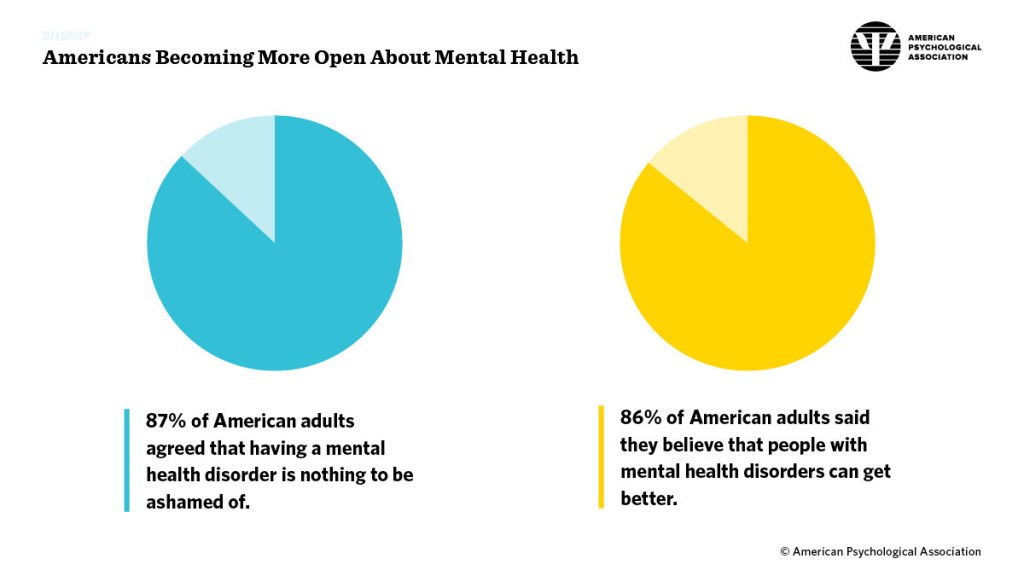
This is not the case though, there are still taboos and stigma associated with mental illness in Anglo Western cultures. Having said this, when analyzing perspectives from different cultures at the global level, it is clear that the Anglo West is more progressive than others. Attitudes towards mental illness are increasingly favorable in these countries. For the most part, it seems that people understand that mental illness is a serious health issue no different than cholesterol or diabetes. As such, people are more open to coming forward and acknowledging their own mental health issues as they understand that it is not their fault. Furthermore, there is a trend towards treatment where people that come forward are open to the idea of treatment both in terms of talk therapy and medication. While there are stigmas and taboos, it seems that this culture is increasingly positive towards mental health issues particularly younger generations.It appears that with each subsequent generation, people are more positive and accepting which is promising for society in general.
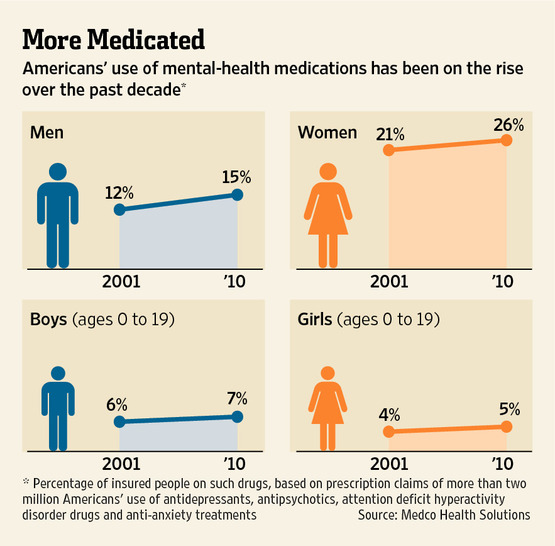
In the past few decades, the amount of people who have been diagnosed with mental illnesses has increased. It is believed that this increase is not due to a true increase in mental illness but rather in an increase in people becoming open and seeking treatment. The increase in people being treated by using prescription medication in the United States can be seen in the graphic above. This positive trend reflects a society where people feel comfortable seeking help and being treated for mental illness which suggests that individuals are less worried about taboos and stigmas than they are worried about their overall wellbeing.
It is hopeful that the acceptance encountered more recently in the Anglo West with mental illness trickles down into other parts of the world and other cultures. These countries in question are considered to be more developmentally advanced and it would be optimal if other countries followed their lead with respect to mental health. Unfortunately, one thing which has worked in favor of the acceptance is the underlying cultural emphasis on bettering oneself. This is typical and important in these countries. The individual is valued over the community and there is a big focus on improving oneself at all costs. This is favorable when it comes to having individuals seek a mental health diagnosis and get the appropriate treatment. Unfortunately, as we will get into, this is not very typical of other cultures which have different values and tend to emphasize family and community over the individual.
References
Barber, Charles. “The medicated Americans.” Scientific American Mind 19.1 (2008): 44-51.
Mojtabai, Ramin. “Americans’ attitudes toward mental health treatment seeking: 1990–2003.” Psychiatric Services 58.5 (2007): 642-651.
Latin America
Mental health is not addressed very openly in Latin America. This is due largely to the values in the Latin American culture. In “Stigma toward mental illness in Latin America and the Caribbean: a systematic review,” the authors explain that familismo and machismo are central to the culture. Both of these actually impair the Latin American culture’s ability to accept mental health issues and the need for treatment.
Familismois the emphasis on family. Family is placed above all. Families are also expected to be cohesive and functional. This becomes a challenge. One big issue with acknowledging that you have a mental health issue is that it will become a burden on the family. A person with mental health issues will not be able to meet their familial obligations, Furthermore, having a mental health issue also challenges the image of a perfect tight knit family. These issues make it harder for a person to come out and be open about mental health. Likewise, people are less likely to accept mental health issues as they understand the burden that it will cause on the family.
Machismo brings out similar issues with gender roles. This value system emphasizes the man as the bread earner and the woman as the keeper of the family. Both of these roles can be compromised by mental illness. If a person suffers from mental illness then they will not be able to fulfill their gender roles. Furthermore, the rest of the family will also have problem ascribing to their gender roles if they are trying to look after the mental health of another person. All of this also stands in the way of taking care of others with mental illness since it is difficult to take care of others while also conforming to all of these gender norms. As a result of this, people are reluctant to open up with mental health issues and Latin American families are more likely to sweep these under the rug rather than dealing with them appropriately.
Since people in Latin America are less likely to come forward and be open about mental health issues, there is still a very large stigma which is reflected in treatment and resources. In “Mental Health and Mental Health Care in Latin America,” it is explained that although mental illness is expected to occur in rates similar to those in other cultures, it goes unreported and as a result resources are very scarce. Alarcon writes, “the estimated figures of 1.6 psychiatrists, 2.7 psychiatric nurses, 2.8 psychologists, and 1.9 social workers per 100,000 are far below those of Europe or the US. The greater concentration of these professionals in metropolitan areas leave unattended at least 45% of the total population in need. On the other hand, patients are seen first by non-professionals, second by non-psychiatric professionals, and only last by mental health professionals. Needless to say, insurance coverage is minimal, and mental health professionals are among the lowest paid in most countries.” The graphic below shows how small the percent of the total health budget dedicated to mental health is throughout Latin America and the Caribbean.
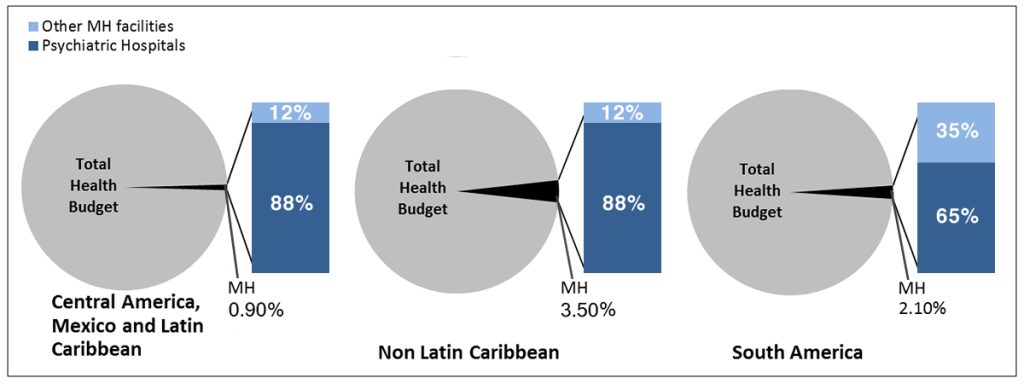
“MH = mental health. MH budget indicated as the median percentage of total health budget allocated to MH; psychiatric hospitals and other MH facilities budget indicated as the median percentage of MH budget allocated; other MH facilities includes outpatient facilities, day hospitals, psychiatric units in general hospitals, and residential facilities.”
It is clear from a universal perspective that mental health is a very large societal issue however, the Latin American culture does not appear to see it as so. Mental health issues challenge the values of Latin America and countries are not very resourceful for people with mental health issues. As a result, they go unreported and untreated thus causing an even larger burden to society.
References
Alarcón, Renato D. “Mental health and mental health care in Latin America.” World psychiatry : official journal of the World Psychiatric Association (WPA)vol. 2,1 (2003): 54-6.
Mascayano, Franco, Tapia, Thamara, Schilling, Sara, Alvarado, Rubén, Tapia, Eric, Lips, Walter, & Yang, Lawrence H. “Stigma toward mental illness in Latin America and the Caribbean: a systematic review.” Brazilian Journal of Psychiatry vol 38,1 (2016): 73-85.
Asia
Throughout Asia, perspectives on mental health differ since the cultures also differ from one another. In general though, like in Latin America, the cultures all value family and the consensus seems to be that mental health issues threaten the stability and happiness of the family. As such, there is a general sense of taboo with respect to mental health issues. In spite of this, the governments and the organizations within the countries are trying to be more proactive as they anticipate how large of an issue this can grow to be.
China is the most influential country in Asia and also one of the most influential in the world because of its population and its economic output. In China, the government is spending a lot of money to try to create resources and professional support for people with mental health issues. This is being done because it is speculated that in China, there are higher proportions of mental health cases than there are in other countries due to a faster pace of life and also more expectations for success on the individual. This is something which challenges the mental health of people. With climbing suicide rates and studies which shows a large percentage of undocumented mental health cases, the government is trying to put systems in place to help people. Unfortunately people are hesitant to use these systems.
As was previously mentioned, people value family in Asia and mental health is seen as something which tears apart families. Furthermore, Asian cultures have a high drive towards work and success. This is also something which is considered to be heavily challenged by mental health. As a result of this, people are very hesitant to speak out about mental health. People with mental health issues rather not talk about them and family members may not be keen to be public about it. These issues tend to be swept under the rug.
In a study done in Japan, it was found that the vast majority of people across different age groups and education levels believed that mental illnesses such as schizophrenia were treatable with medication, as noted in “Public perceptions towards mental illness in Japan.” In spite of the understanding of the biological basis of mental illness, the same Japanese people in that study felt that people with schizophrenia were not as capable or as trustworthy. This stigma towards people with mental illness makes it less likely for people to come forward for help which means that even though they understand and support prescription cures for mental illness, people are not as likely to come out and seek a diagnosis out of fear that they will be viewed in a negative light.
While this is not a positive perspective of mental health, it is relevant to note that it is progressive in that it acknowledges the biological basis and also the place for prescription treatment. I would argue that with time, the cultural and historical stigma associated with people that have mental illness will begin to fade and as a result, people will more further embrace diagnosis and treatment.
References
Kasahara-Kiritani, Mami et al. “Public perceptions toward mental illness in Japan.” Asian journal of psychiatry vol. 35 (2018): 55-60. doi:10.1016/j.ajp.2018.05.021
Liu, Jin, et al. “Mental health system in China: history, recent service reform and future challenges.” World Psychiatry 10.3 (2011): 210-216.
Vijayakumar, Lakshmi. “Suicide and mental disorders in Asia.” International Review of Psychiatry 17.2 (2005): 109-114.
Middle East
The Middle East is an area where the culture is largely defined by religion. Although not everyone in the Middle East is Muslim, the majority of the people are and the countries’ laws and norms are in accordance with the Islam religion. Islam is a way of life and it completely shapes beliefs and attitudes. Through Islam, there is a common identity across the different countries of the Middle East and this helps to establish the cultural norms and traditions.
Mental health is something which is rarely discussed in the Middle East. I personally grew up in United Arab Emirates and the truth is that until I came to the United States, mental health was not something that I was even familiar with. In retrospect, I know of a lot of cases of people that I now suspect have mental health issues but this is something which is very much minimized or glossed over. Families tend to either ostracize these individuals or “clean up after them,” because any deviation from the norm and any form of irregular character is considered to be shameful or a lack of honor for the family.
Many people, even educated ones, will argue that mental health issues are due to a lack of faith or devotion to Allah. There is a tendency to associate everything to religion and this is no exception. Although the biological basis for mental health is well documented, it is not accepted at all and as a result, mental illness is seen as a choice. People suggest that if you pray more or show more devotion then mental health issues will go away.
Naturally, due to these beliefs, there is a lot of hesitance to talk about mental health. It is not something that people want to discuss because of how poorly it is looked upon. Furthermore, since it is suggested that it is something that can be healed through spirituality and religion, there is really no such thing as mental health care. There is no place for psychiatry in the Middle East due to how tightly people cling to religion. While it is true that the mind and even prayer can have a positive effect on mental illness, it is completely wrong to suggest that this alone can cure mental illness.
Overall, I would argue that the beliefs on mental illness in the Middle East are completely outdated. Even though there is access to new and more complete information, there is a cultural stigma against it. For example, even after becoming more educate on mental health issues through this course, I can not imagine myself speaking up about it at home. I think that my elders would be horrified and I would be seen as trying to challenge my religion. This is rather unfortunate because it makes it difficult to overcome these stigma and results in a cultural block towards these very serious societal issues. Without more widespread acceptance of mental health, people will not be compelled to seek treatment and as such the overall burden on society will be much larger than in countries where mental health is more openly discussed and treated.
References
Alahmed, Salman et al. “Perceptions of mental illness etiology and treatment in Saudi Arabian healthcare students: A cross-sectional study.” SAGE open medicine vol. 6 2050312118788095. 17 Jul. 2018, doi:10.1177/2050312118788095
Sewilam, Ahmed M et al. “Suggested avenues to reduce the stigma of mental illness in the Middle East.” The International journal of social psychiatry vol. 61,2 (2015): 111-20. doi:10.1177/0020764014537234
Conclusion
In conclusion, it is clear that for the most part, mental illness and the necessary treatment of these issues remains a taboo in most parts of the world. In studying different cultures, some similarities have emerged. First, there are still negative ideas associated with people that have mental illness. These people, in general, are perceived to be less dependable or trustworthy. Second, across many cultures, there is a concern for how an individual with mental illness burdens others. This leads the individual in question to avoid a diagnosis and even close friends and family may try to help the individual avoid that formal diagnosis.
While it seems imperative for people to just accept mental illness at all costs, as we have seen, the stigmas and taboos associated with mental health are deeply tied to cultural norms and beliefs which makes this a monumental challenge. I think that the best we can do is speak up and spread awareness with the hopes that society will be driven by the information and data presented to them and abandon their old beliefs in order to embrace real change with regards to these issues.
 Mental Health and Culture